Here's what nobody tells you before you drive an RV to Alaska: Anchorage isn't just a city on your itinerary. It's the last place where everything is easy. The last Costco. The last well-stocked parts store. The last place you'll see gas stations every few miles instead of every hundred. North of here, it's the Parks Highway to Denali through 240 miles of wilderness. South, it's the Seward Highway — one of the most jaw-dropping drives in North America — to the Kenai Peninsula and glaciers that calve into the sea.
Anchorage has 16 dump stations in the area, a handful of solid campgrounds, and every service an RVer could need. Use this stop wisely. What you forget to do here, you'll regret on the road to Fairbanks.
Dump Stations in Anchorage
The Anchorage area has 16 dump stations — a mix of campground dumps, gas station facilities, and dedicated dump points. For Alaska, that's a lot. For context, the entire 360-mile stretch of the Parks Highway between Anchorage and Fairbanks has a fraction of that.
Free Options
- Chevron Dump Station (Anchorage) — Free dump access. A convenient stop if you're already fueling up.
- Ship Creek Landing RV Park (Anchorage) — Free for guests. Google rating: 3.7/5. Walking distance from downtown and the Ship Creek salmon fishing area.
Paid Options
- Mobile Supply (Anchorage) — Fee-based dump station.
- Centennial Campground — Municipal campground with 84 sites and a dump station. Self-service kiosk for payment. Near downtown and the Glenn Highway.
Most Alaska state park campgrounds have seasonal dump stations, but they close when the campground closes (typically mid-September). Dump before you leave Anchorage if there's any doubt about availability on your route.
Browse all 16 Anchorage area dump stations
Where to Camp
Centennial Campground — The Municipal Workhorse
Run by the Municipality of Anchorage, Centennial has 84 sites (21 with electric hookups) near downtown and the Glenn Highway. It's the most practical base for exploring the city. Dump station on-site. Self-service kiosk registration means you can arrive late without hassle. It fills up in peak summer — arrive early or call ahead.
Golden Nugget RV Park — Full Hookups
If you need full hookups after weeks of dry camping in the Alaska backcountry, Golden Nugget delivers. Laundry facilities, full hookups, and proximity to the Alaska Native Heritage Center. A good recovery stop.
Eagle River Campground — Chugach State Park
13 miles from Anchorage in Chugach State Park, one of the largest state parks in the US. 57 sites, no hookups. This is for people who want to camp in the mountains, not in a parking lot. Near the Glenn Highway for easy access. No hookups means no crowds — which in Alaska is the whole point.
Free Camping
No free camping within the Anchorage municipality — the city has anti-camping ordinances. Once you're outside the metro on BLM or state land, dispersed camping is available along the highways. But in Anchorage itself, use the campgrounds.
Before You Leave Anchorage: The Checklist
This section exists because Alaska is not like the Lower 48. Forgetting something in Arizona means a 20-minute detour. Forgetting something here might mean 200 miles of backtracking.
- Fill your fuel tank completely. Gas stations can be 100+ miles apart on Alaska highways. This is not an exaggeration.
- Stock up on groceries. Fred Meyer, Safeway, Walmart, and Costco are all in Anchorage. Prices jump 30-50% in smaller Alaska communities. Buy what you need here.
- Top off propane. Available at hardware stores and RV parks in Anchorage. Don't assume you'll find it on the road.
- Get any RV repairs done. Bell's Alaska and other RV service shops in Anchorage are your last major service point before heading north or south. If something's been making a noise, fix it now.
- Check your tires. Alaska roads can be rough, and you're about to put serious miles on them. Potholes, gravel sections, and frost heaves are common.
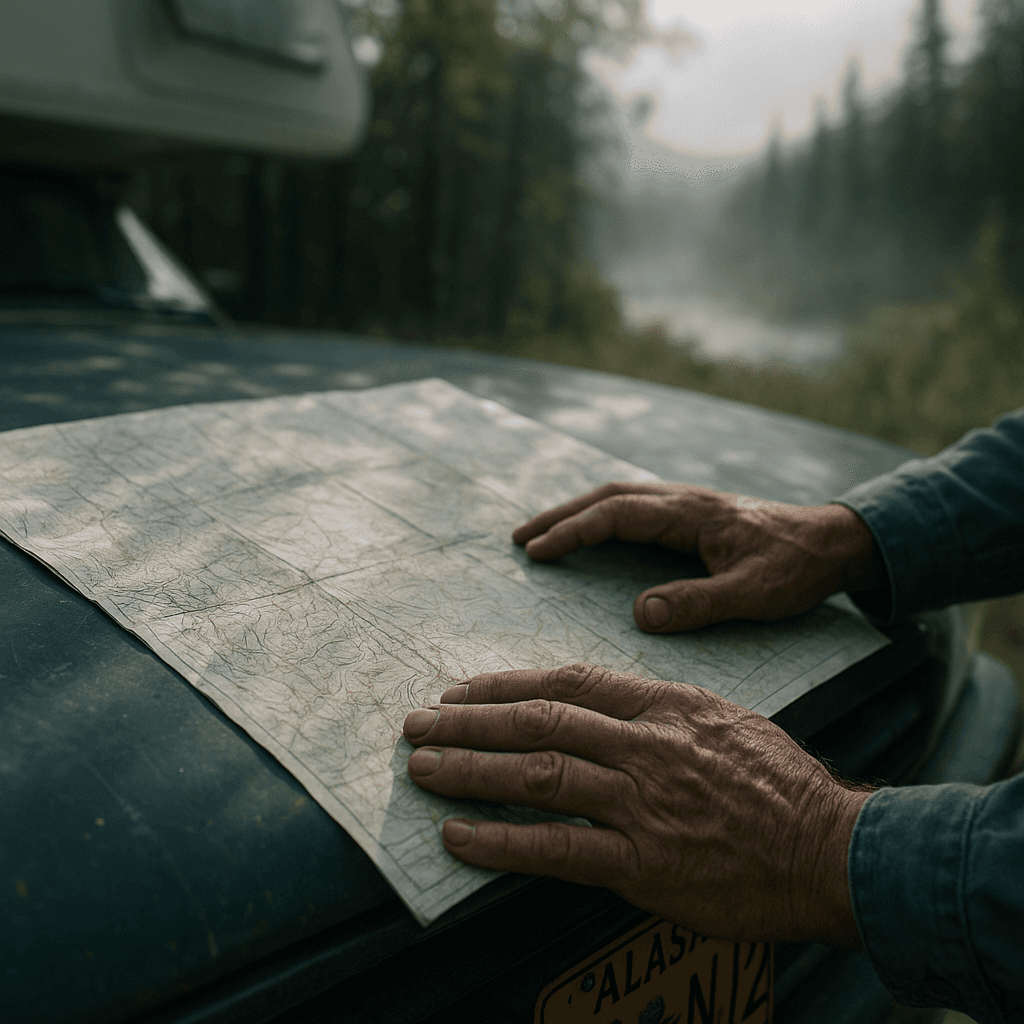
- Download maps. Cell service gets spotty quickly outside Anchorage. Have offline maps for your route.
When to Visit
Alaska's RV season is short and intense. Here's what to expect:
| Season | Highs | Lows | What to Know |
|---|---|---|---|
| Spring (Apr-May) | 45°F | 30°F | Late thaw. Campgrounds start opening in May. Daylight increasing rapidly — up to 18 hours by late May. Roads may still be icy early in the season. |
| Summer (Jun-Aug) | 65°F | 50°F | This is it. The RV season. Up to 19+ hours of daylight in June. Mild temps, but rain is always possible. Book Denali campgrounds months in advance. |
| Fall (Sep-Oct) | 48°F | 32°F | Northern lights begin. Fall colours. First snow as early as September. Campgrounds closing. A beautiful but narrowing window. |
| Winter (Nov-Mar) | 22°F | 8°F | Only 5.5 hours of daylight in December. Most campgrounds closed October through April. Winter RVing in Alaska is for the experienced and well-equipped only. |
About the daylight: If you visit in June, prepare for near-constant light. The sun sets around 11:30 PM and rises before 4:30 AM, and it never gets truly dark. Bring eye masks and blackout curtains for your RV. You'll need them.
Where to Go from Anchorage
Denali National Park (240 miles north)
North America's highest peak at 20,310 feet, though you'll need clear skies to see it — the mountain creates its own weather. A single road penetrates the wilderness, with grizzly bears, wolves, caribou, and moose along the way. The park limits vehicle access beyond mile 15; from there, you take the park bus. Book campgrounds months ahead for summer.
Kenai Fjords National Park (130 miles south)
Glaciers calving into the ocean, humpback whales, puffins, sea otters. Boat tours from Seward are the main attraction. Exit Glacier is accessible by road — the only glacier in the park you can walk up to. The drive down the Seward Highway to get here is half the experience.
The Seward Highway
The 127-mile drive from Anchorage to Seward is a National Scenic Byway for good reason. Turnagain Arm on one side, mountains on the other. Watch the cliffs for Dall sheep. Watch the road for moose. Pull over often — there are dozens of scenic viewpoints. This is one of those drives people come to Alaska specifically to make.
Tony Knowles Coastal Trail (In Anchorage)
If you want something closer, this 11-mile paved trail runs along Cook Inlet from downtown. Mountain views, moose sightings, and if you're lucky, beluga whales in the inlet. Bikeable and walkable. A perfect rest-day activity.
Wildlife Safety
This isn't a section you'll see in a Lower 48 city guide, but in Alaska it matters. Moose are a serious road hazard in Anchorage. Adult moose weigh 1,000-1,500 pounds, and they don't move for vehicles. They're most active — and hardest to see — at dawn and dusk. Drive alert, especially on the Glenn and Seward Highways.
Bears are present in Chugach State Park and along hiking trails. If you're camping outside the metro, store food properly and carry bear spray. This is bear country, year-round.
Plan Your Anchorage Base
Every Alaska RV trip starts and ends in Anchorage. Use it. Top off everything, get your rig serviced, dump your tanks, and load up the fridge. Then head out on what might be the most spectacular RV driving you'll ever do.
Browse all 16 Anchorage dump stations | All Alaska dump stations
From the RVingLife Shop
RV Gear You Might Like


Free app
Take the map with you.
44,000+ dump stations, cost and hookups, in your pocket — free on iPhone and Android.
Get the free app